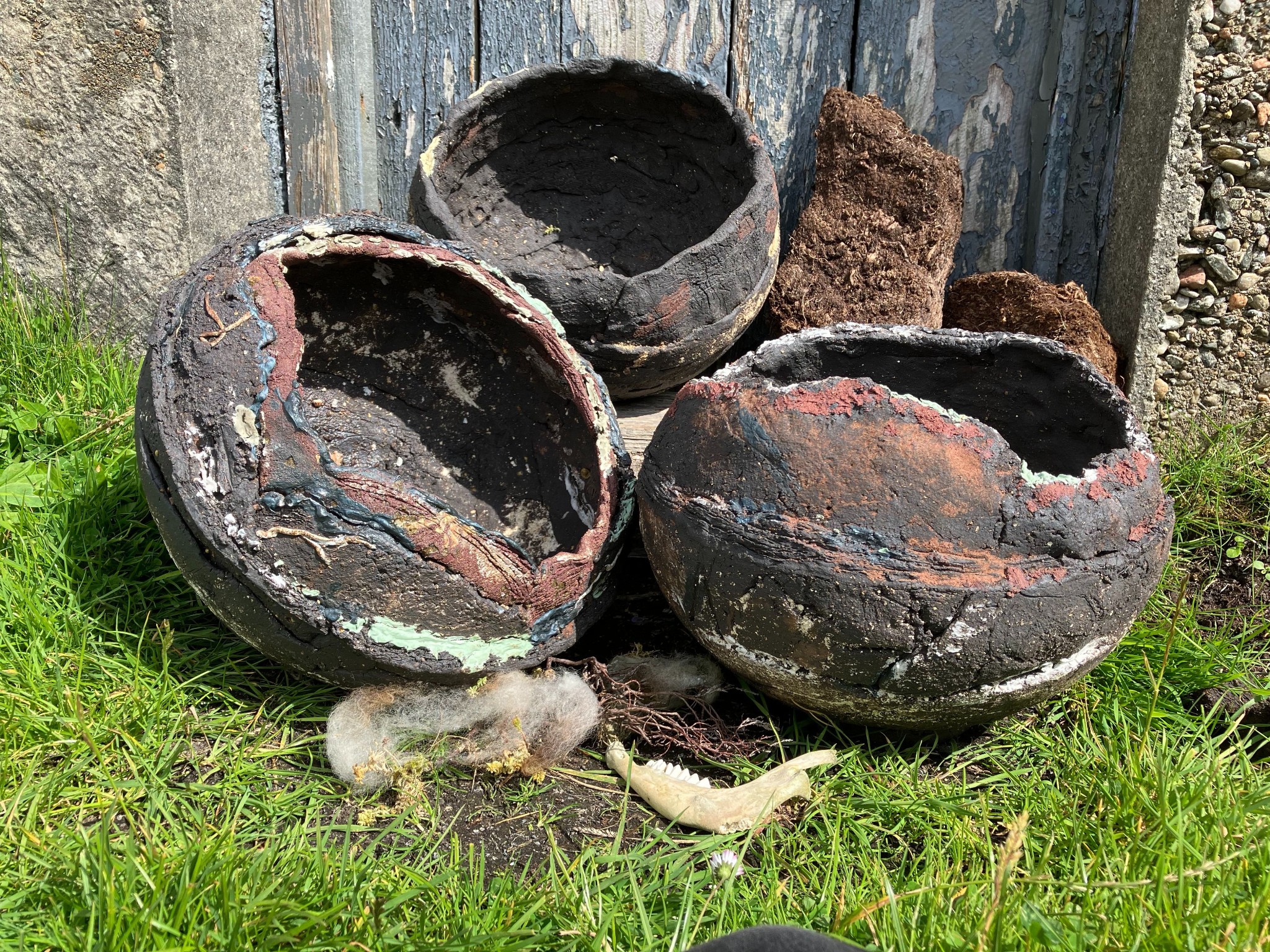
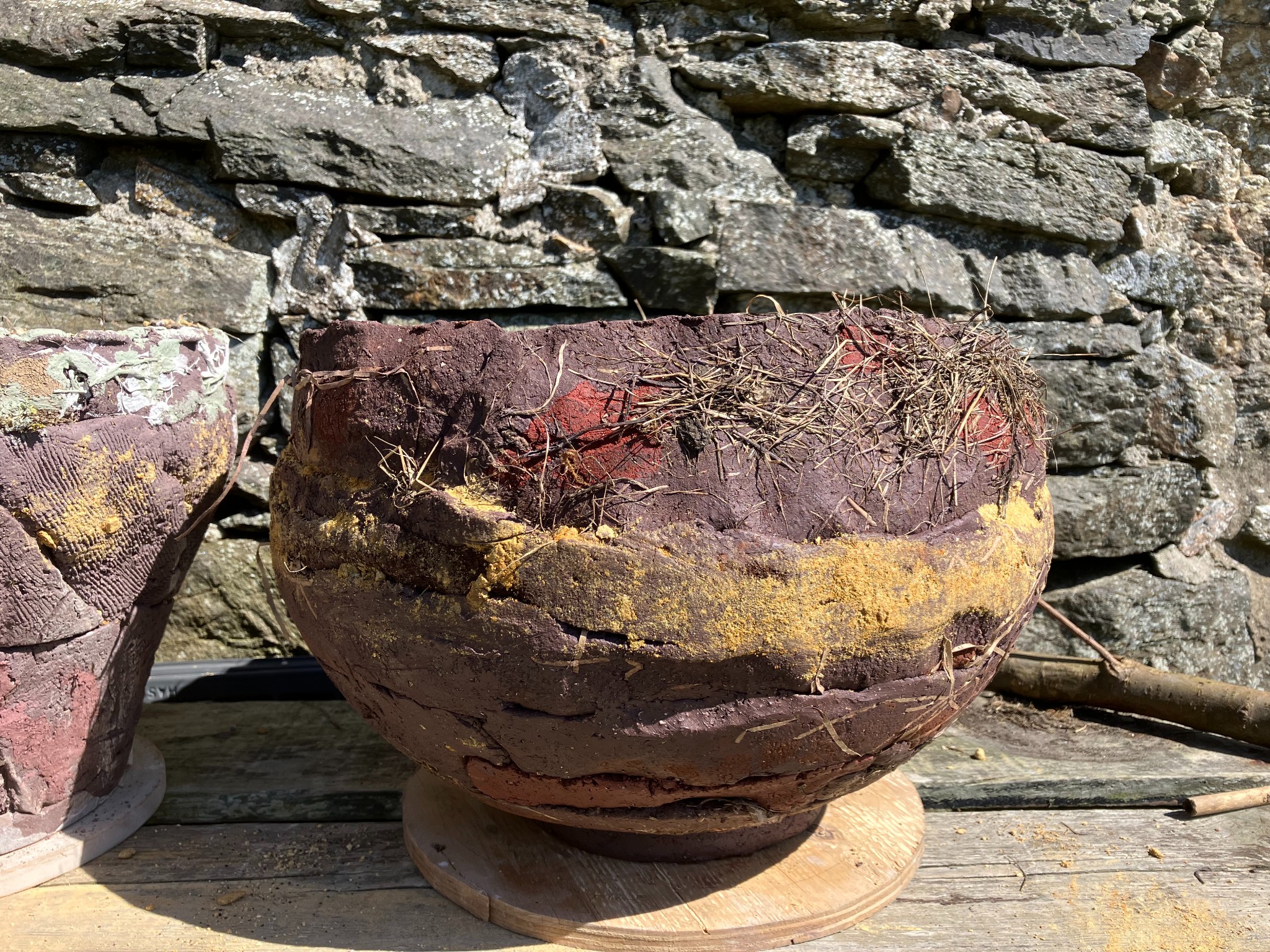
Sharon McGeady was successful in her application for the Winter 2024/25 round of Visual Artists and Craft Makers Awards (VACMA). In this blog, titled "Peat: A Fuel for Living", she shares with us her how the funding has allowed her to research and develop a new body of work examining the natural environment and resources of North Mainland (Shetland).
Sharon is a ceramist, who you may know from The Pottery, North Roe.
"What is good and what is bad? I do not have the answers, but in my mind there needed to be a wider conversation and for me clay was the way to initiate this."
"In 2025 I was fortunate enough to be offered a VACMA (Visual Artist and Craft Makers Award) to explore the importance of our peatlands here in Shetland and to capture a point in time where we are on the cusp of huge change. I would like to thank Shetland Arts, Creative Scotland and VACMA for their support in enabling me to dedicate time to creating something which I believe raises questions on a hugely important issue.
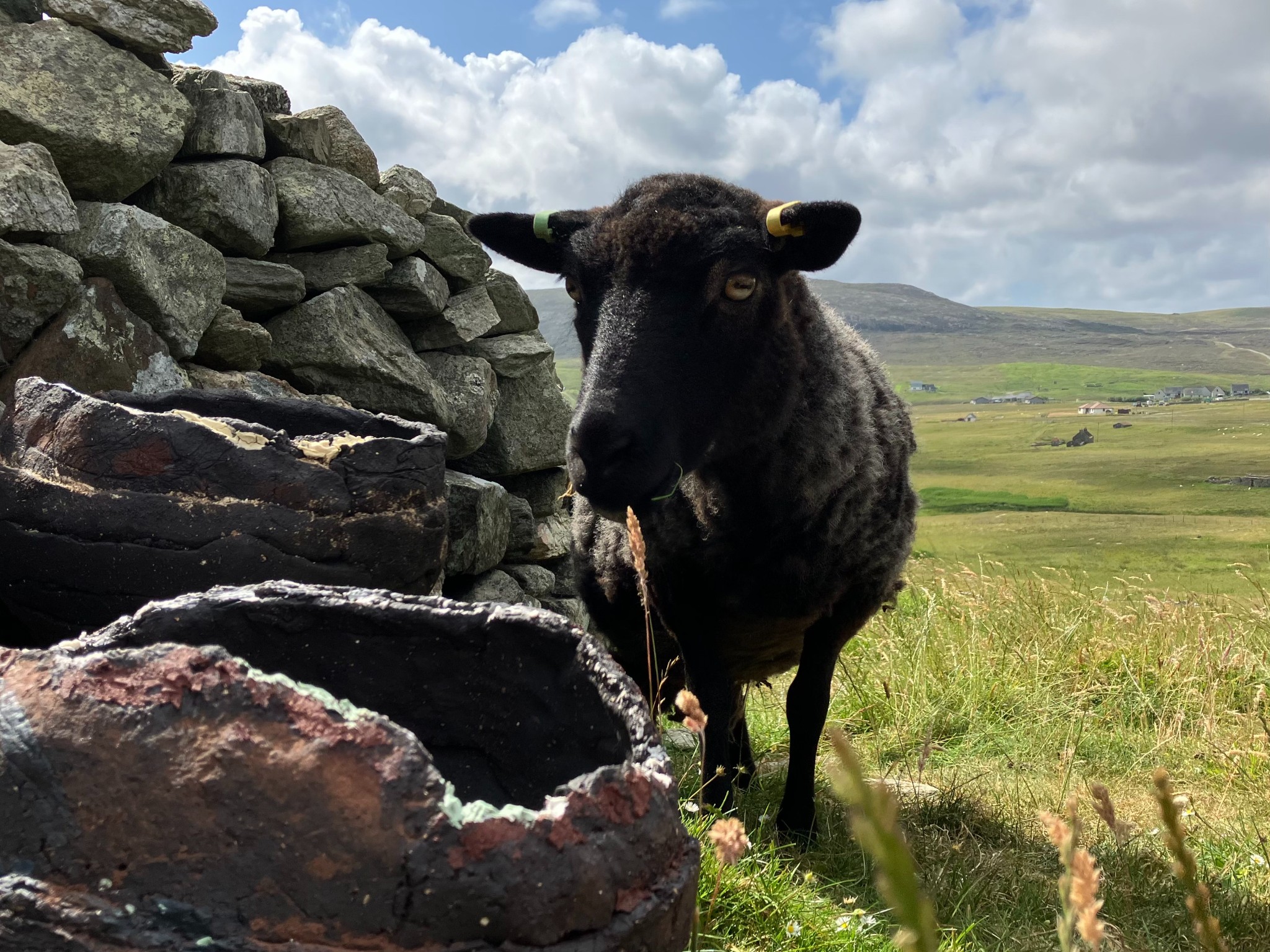
I live in a wild, beautiful place where old and new worlds collide. The life of the traditional crofter has, for centuries, aligned with the seasons and the weather. Lambing, casting peats, sowing oats, clipping sheep, fishing and hay making have sustained individuals and communities throughout the isles. The arrival of oil set Shetland apart and brought prosperity for some, as well as other huge environmental impacts. Recently the Scottish government’s decision to build 103 huge wind turbines on environmentally sensitive peatland areas has split communities with some seeing this as progress and others as tragedy.
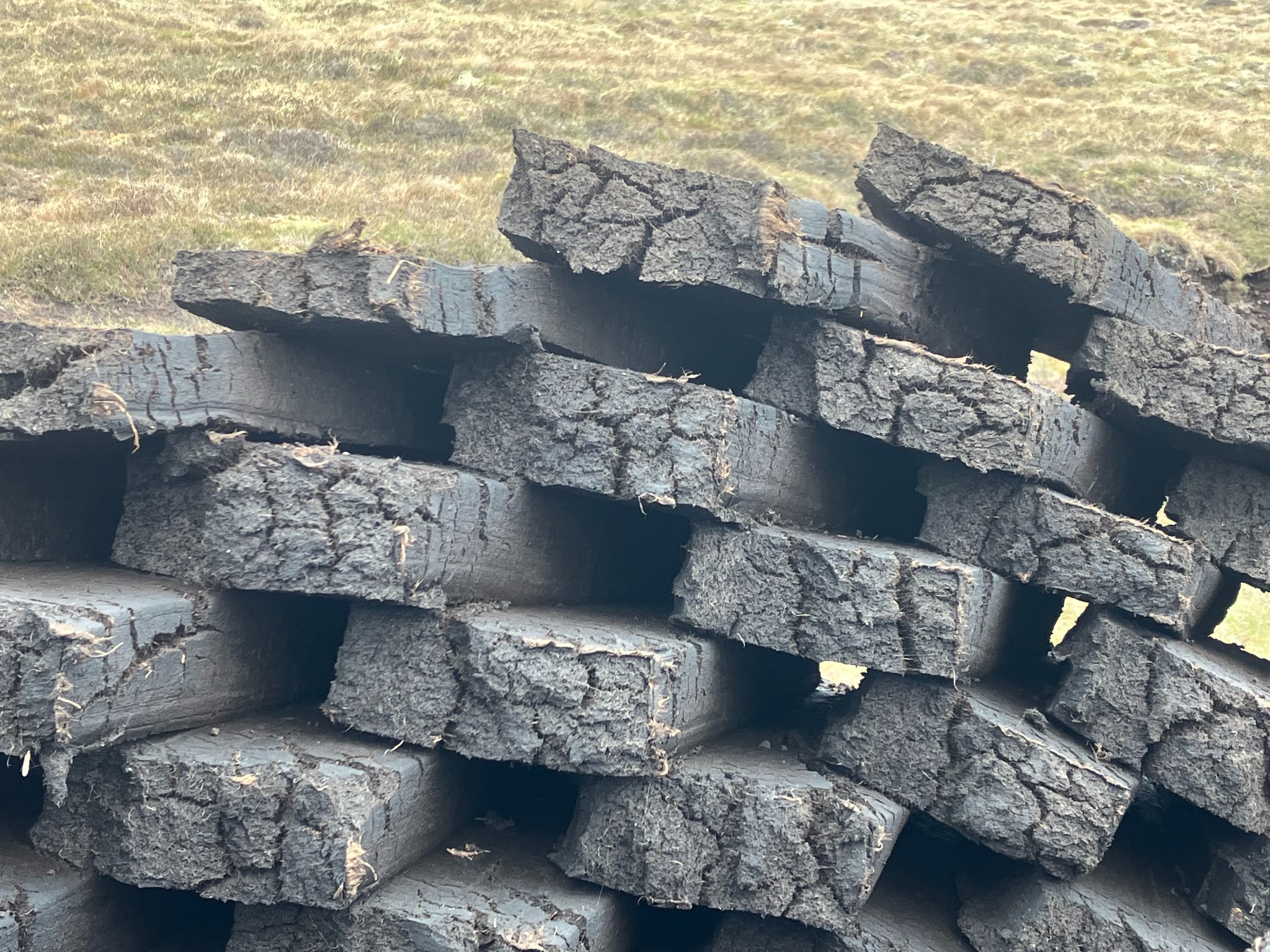
Those few folk who still cut their peat banks by hand for fuel with the sweat of their labour, one peat at a time, stand and watch wide eyed as huge machines pour thousands of tonnes of concrete into virgin peat to make ‘green’ energy. Boats from far off lands arrive with blades, diggers and lorries disrupt travel and divide communities, substations and cables take this resource hundreds of miles away to the south to benefit those who we do not know and who possibly do not care about our environment. Wildlife is left to survive the best it can. Words such as ‘carbon neutral’, ‘sustainable’ and ‘renewables’ become common language in the media and are banded about with assumptions and without explanations.
What is good and what is bad? I do not have the answers, but in my mind there needed to be a wider conversation and for me clay was the way to initiate this.
For generations the peat fired stove was as the heart of the home. It heated the living space, boiled water, brewed tea, cooked bannocks and soup, dried mutton and fish, warmed sick lambs and was the centre of life. Here, at the hearth, fiddle music played, stories were shared, ganseys knitted, kishies woven and babies welcomed. The resting chair by the fire was where old folk snoozed at the close of their days. Peat was the fuel for the living. When the fire went out, life was extinguished and stone homes became damp and slowly turned to rubble."