The Project
"This project was inspired by the Shetland Bumble Bee, the work of Joseph Beuys and Michaelswood.
The Shetland Bumble Bee or Bombus Muscorum Agricolae, named after the Roman explorer who allegedly named Shetland Ultima Thule, is only found in Shetland and the Western Isles, it has a rich copper coloured body and is one of the RSPB Species on the Edge target species.
Joseph Beuys believed that everyone was an artist, he promoted communal working and responsible environmental interaction, he organised the planting of 7,000 trees in Kassel, Germany.
Michaelswood is a special woodland, planted and maintained in memory of Michael Ferrie by his family, Ray Betty and Alan. It has evolved into a significant community area and provides solace and society to many.
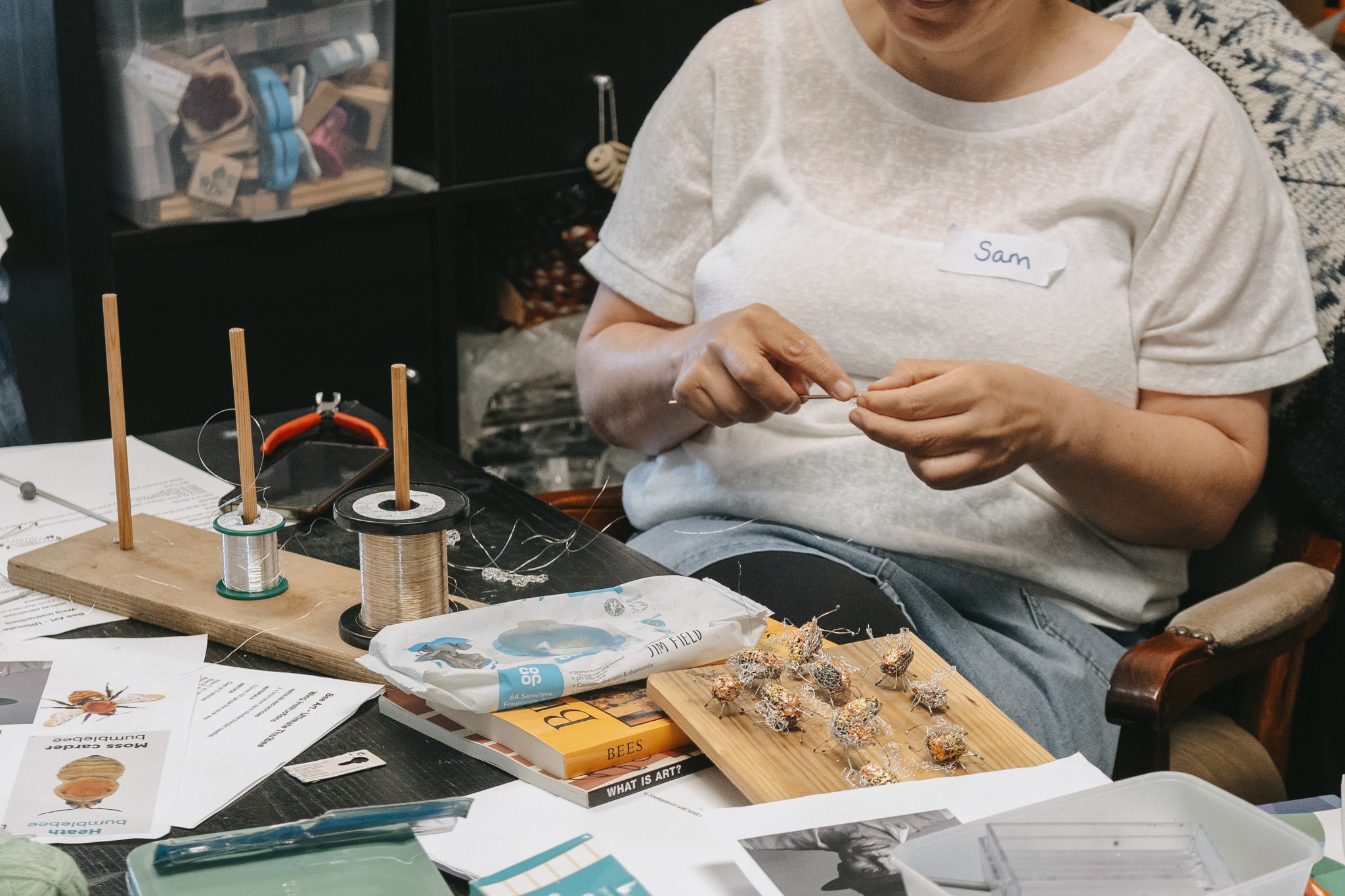
To celebrate all three, I devised a project that will knit and place 100 bees through Michaelswood. The project included workshops in knitting with wire and bee construction.
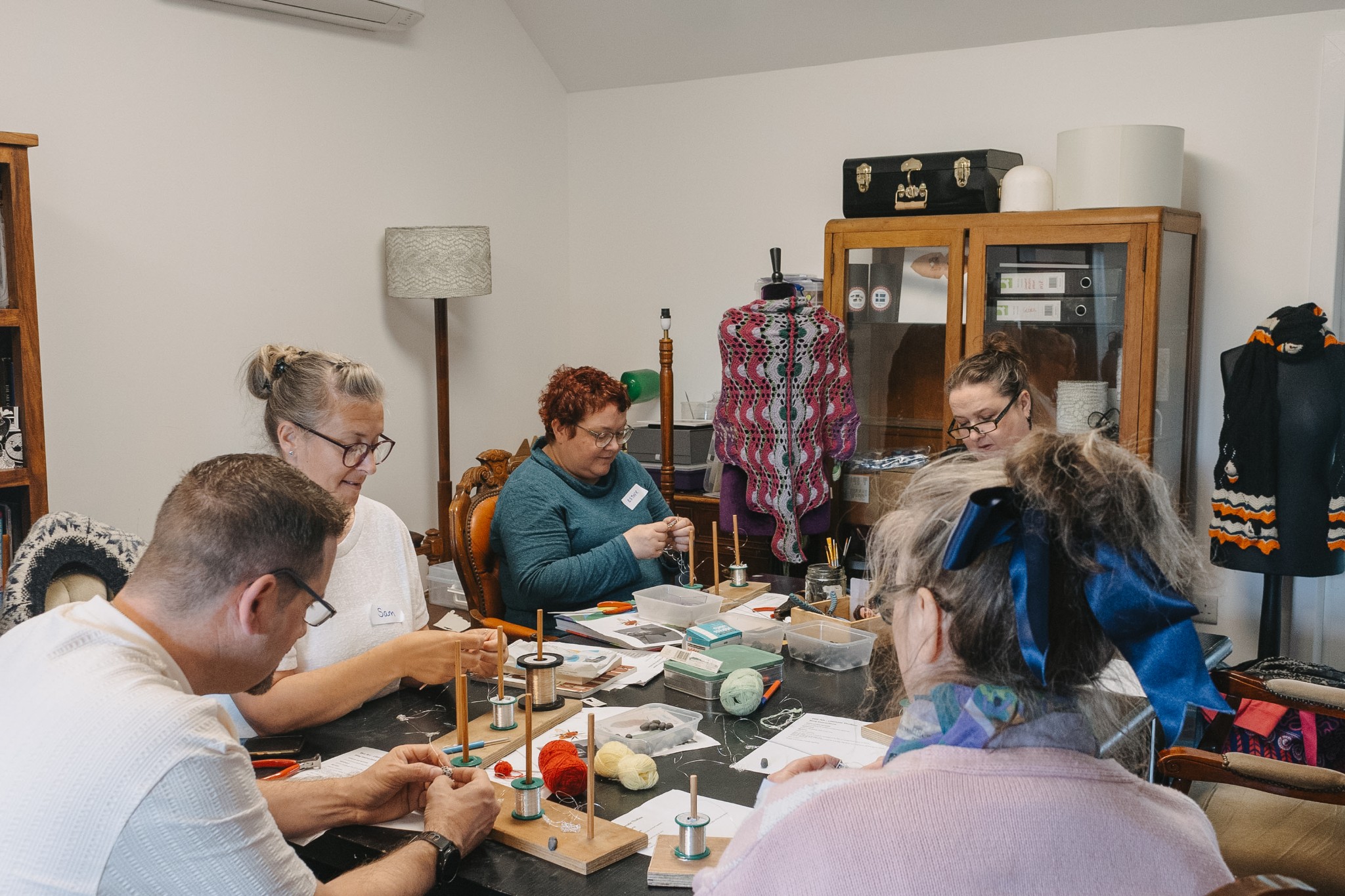
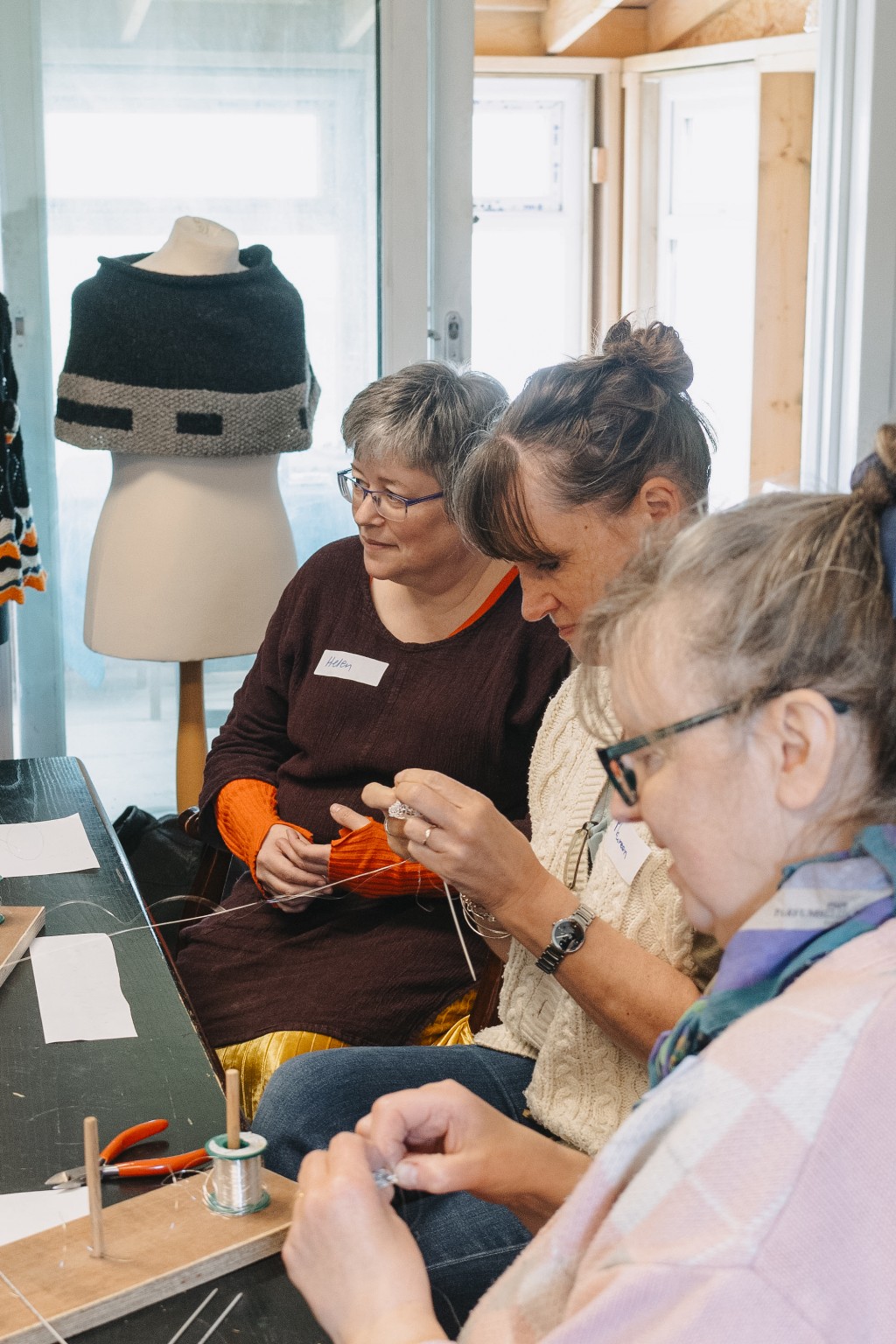
24 Worker Bees have met in my hive in the north of Shetland. It has been such a pleasure to meet fellow bees and to work together to create 100 life size Shetland Bees. Bees within hives have fixed roles; workers, drones and queens and have fixed jobs. I set our hive up so all the worker bees had a chance to try out different jobs making all the different parts although maybe not fulfilling all the roles!"
The Bees
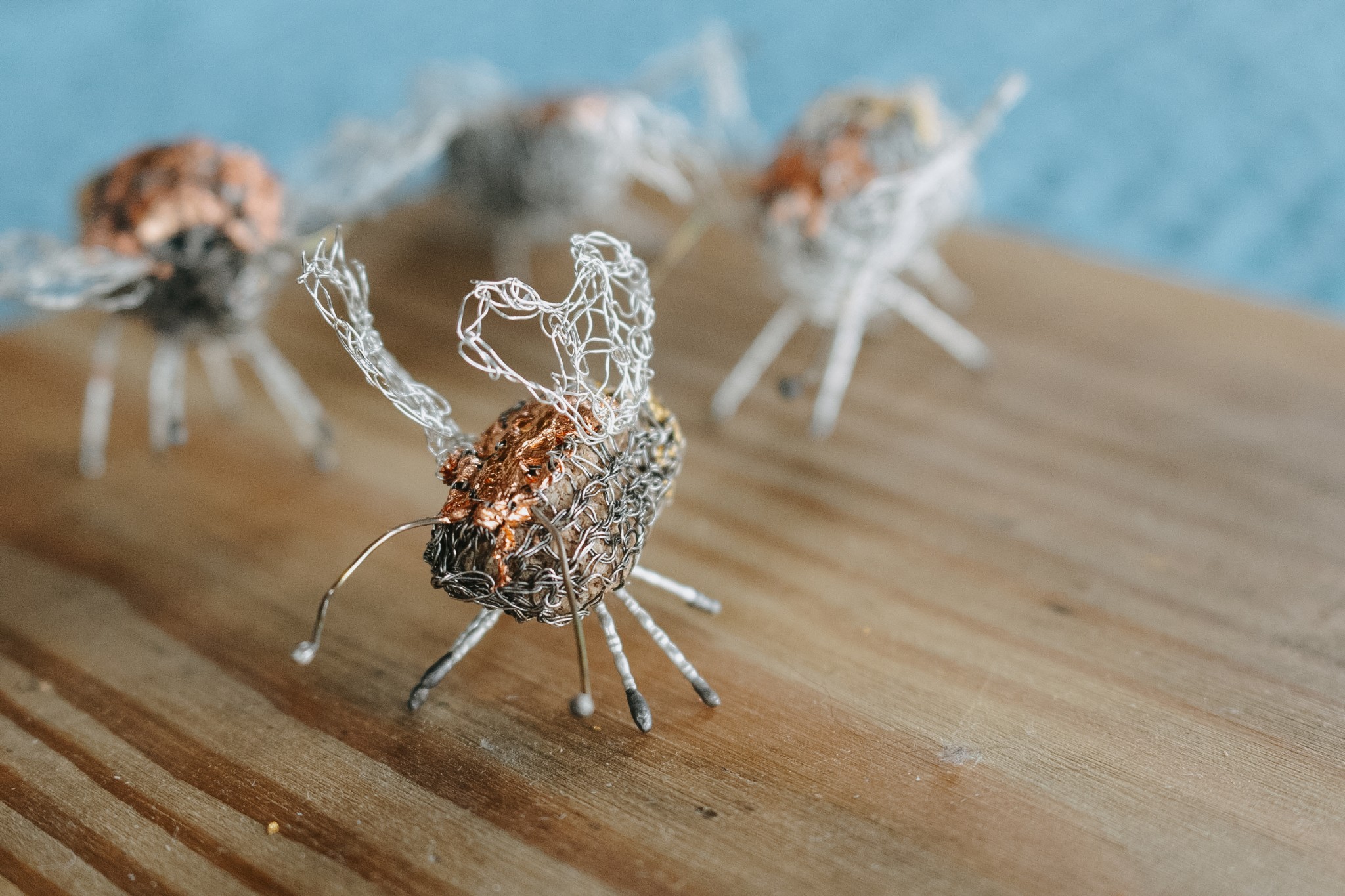
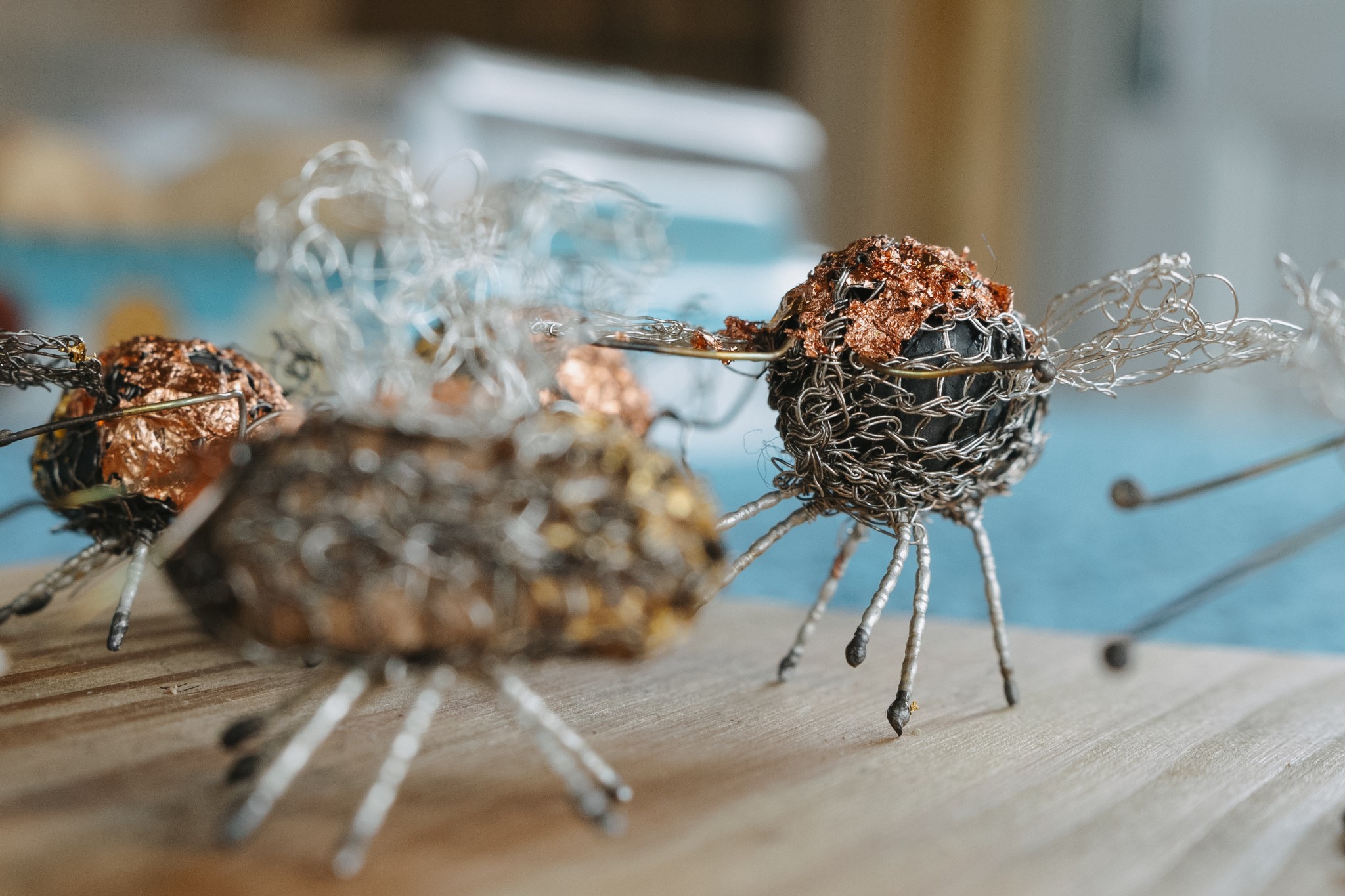
"The bees are made up of various parts.
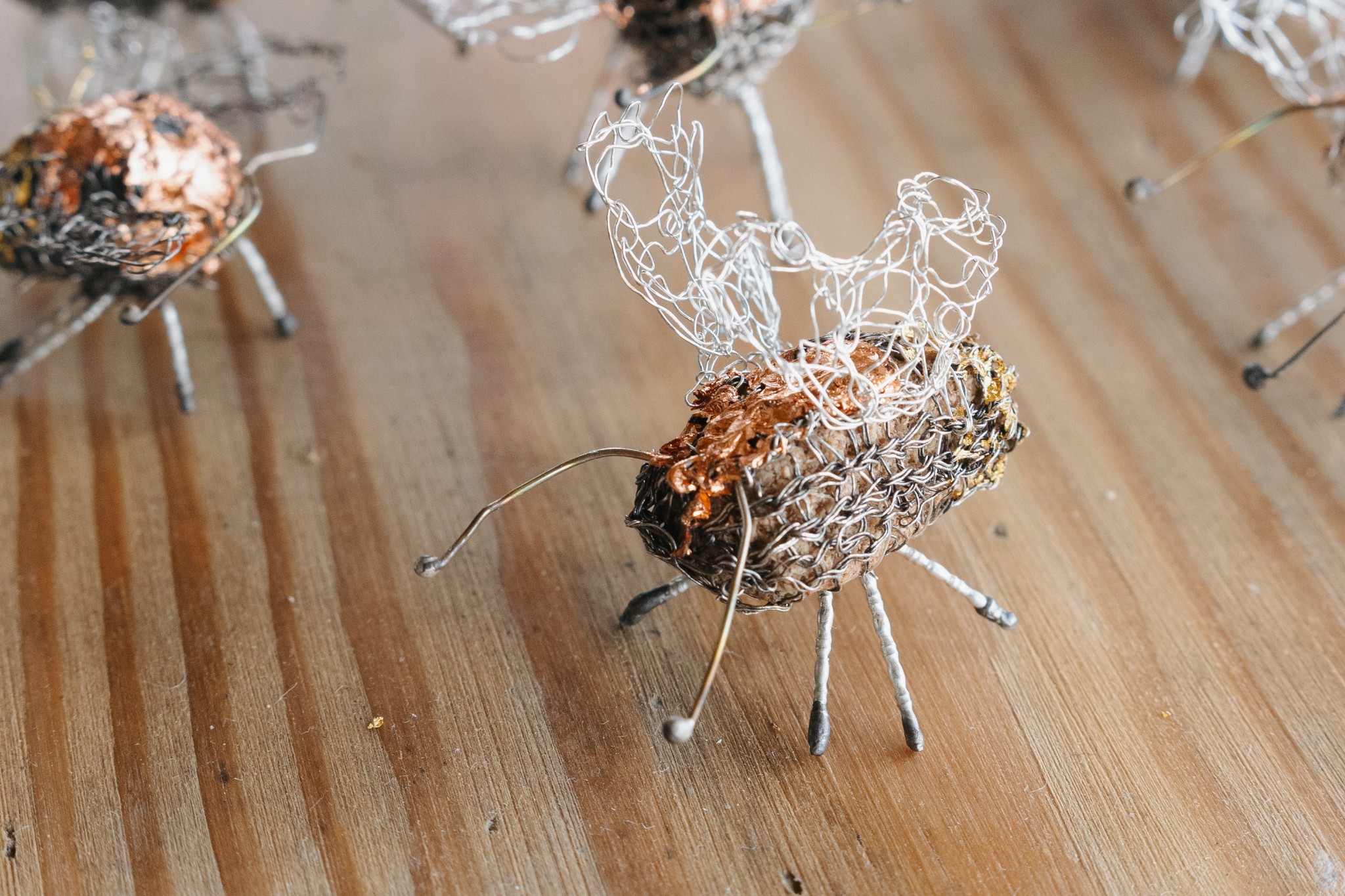
An air hardening clay body, hand formed and shaped a bit like a cashew nut or a jelly bean. These need more than 24 hours to dry and harden so bodies made one week were used by the worker bees the following week.
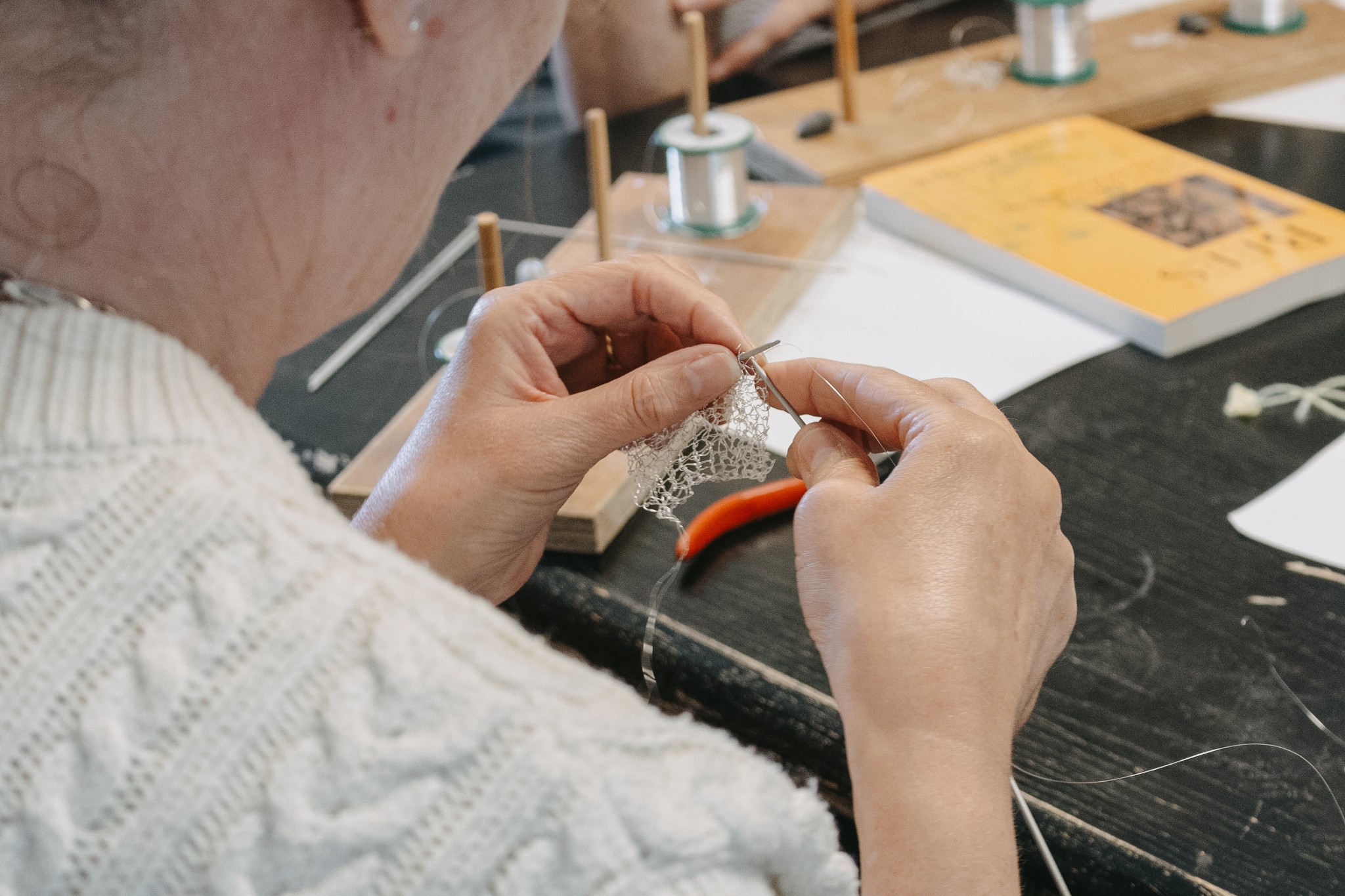
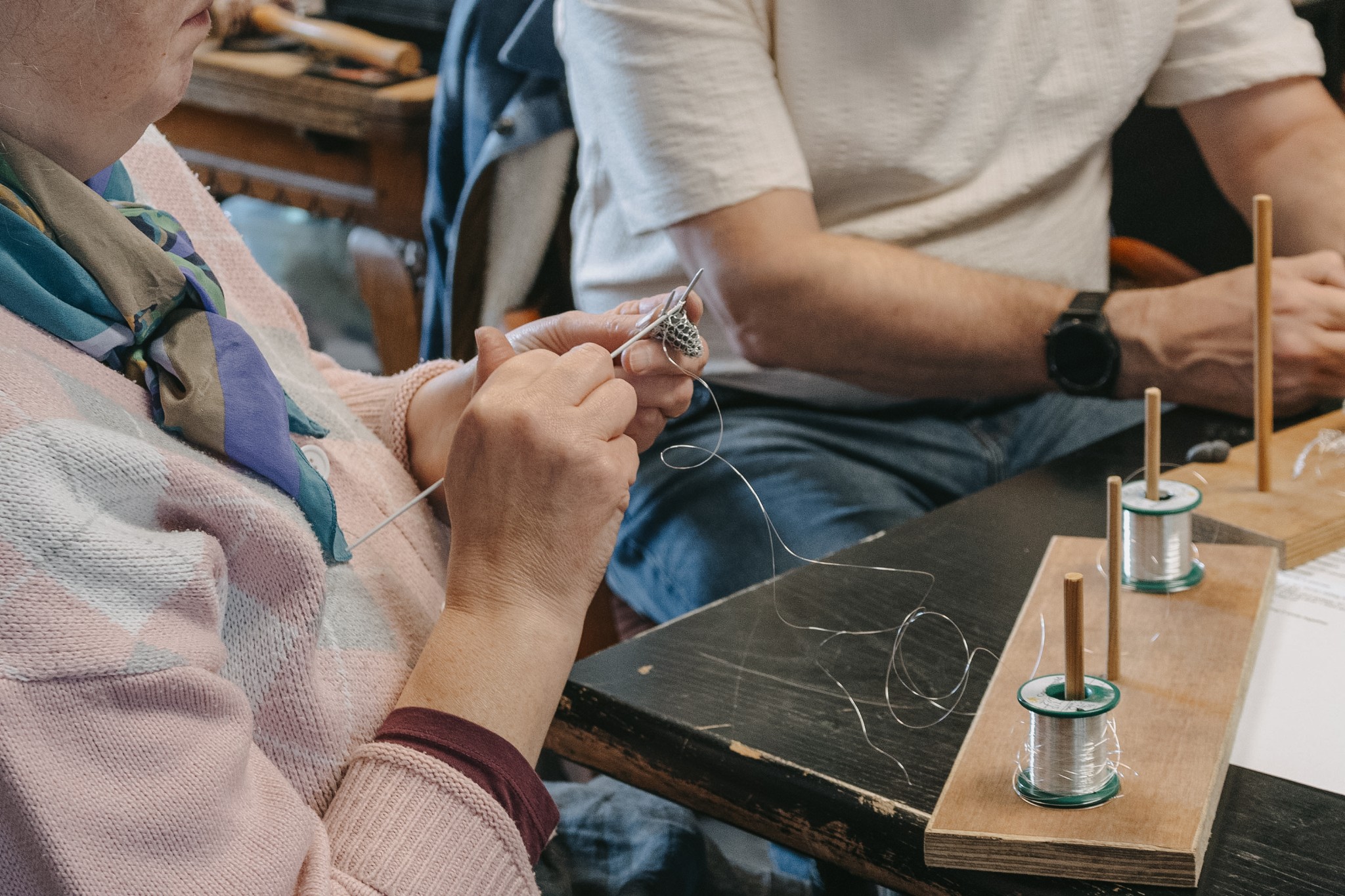
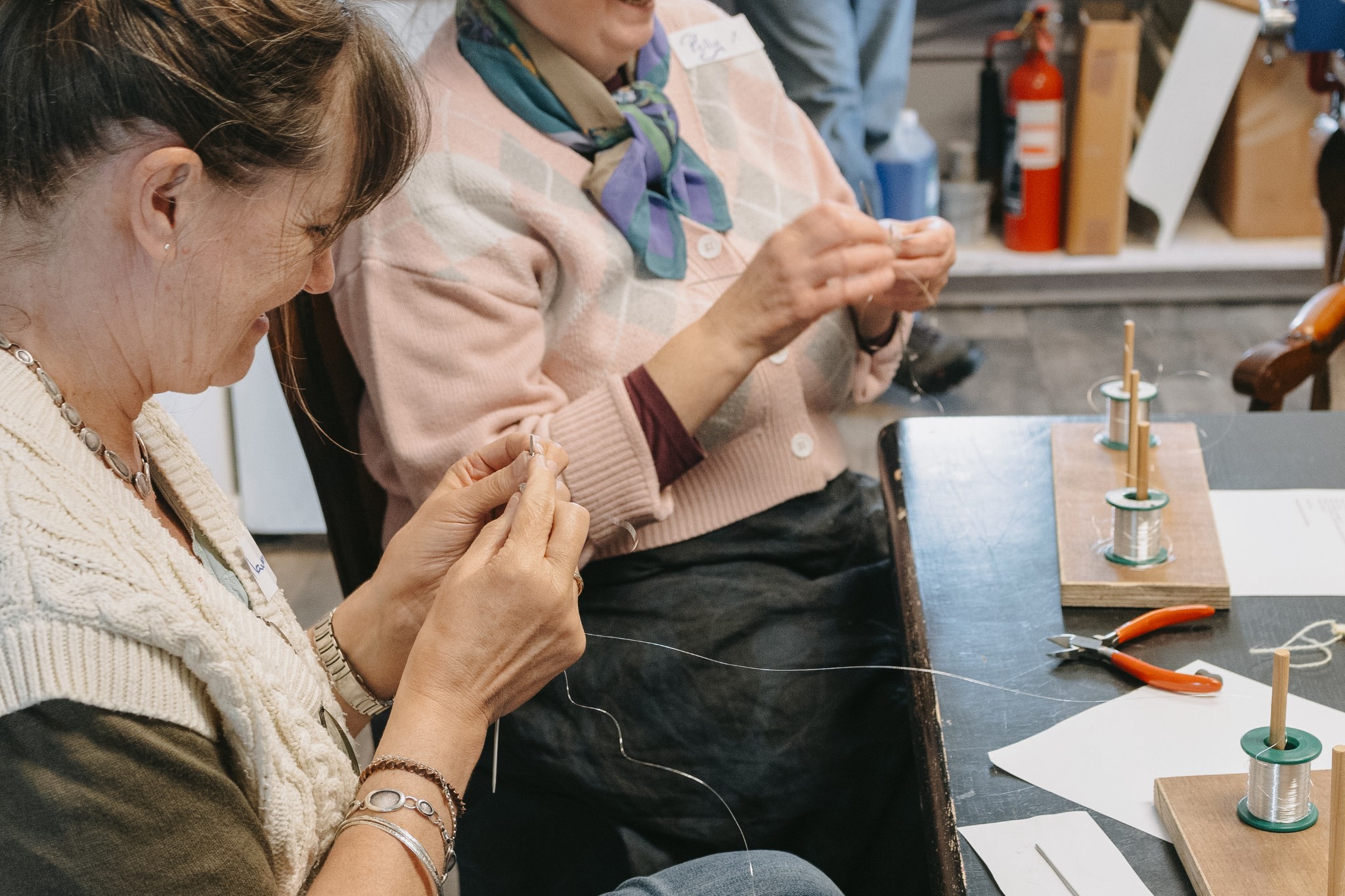
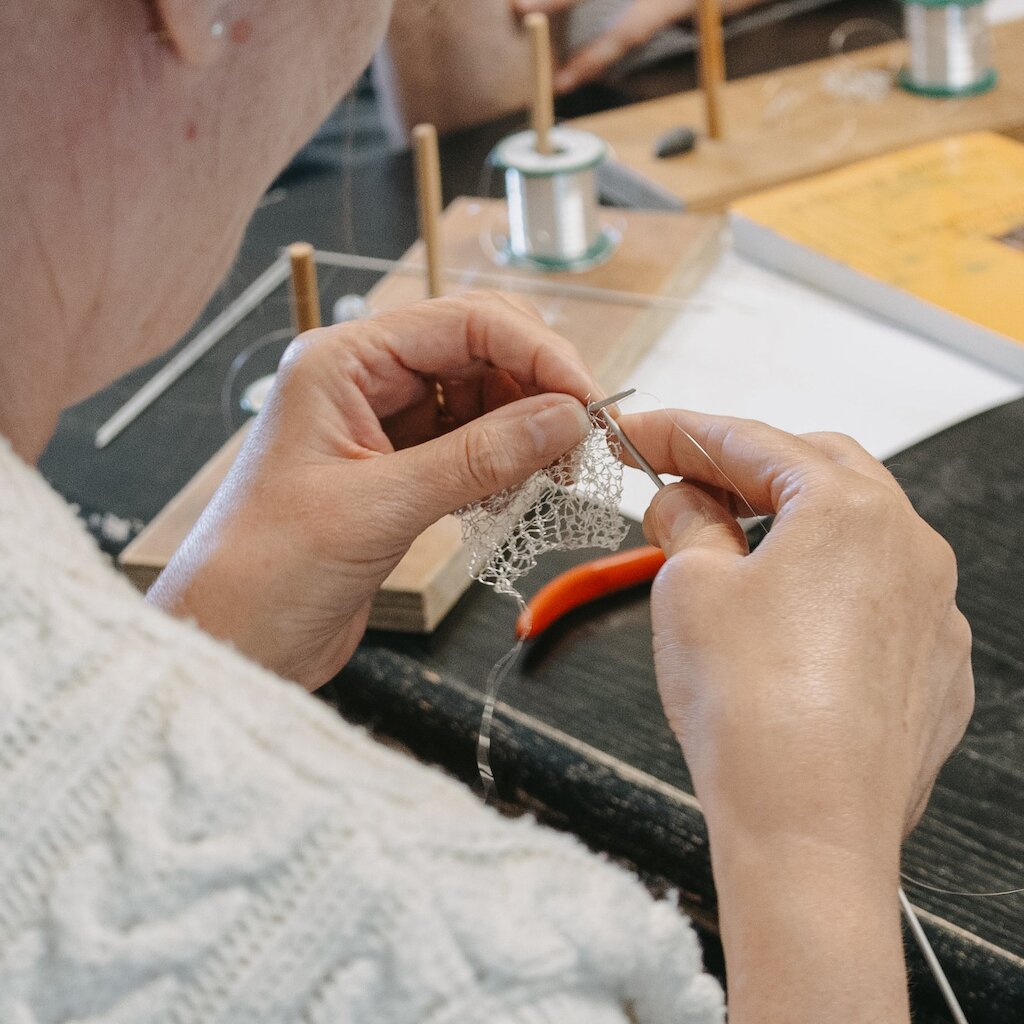
Wings are next, a tiny piece of lace knitting using Shetland Lace techniques and a single strand of 0.2mm silver wire. The actual bees wings are actually 4 but look like 2 - the smallest back wings are linked by tiny hooks to the front wings, we made each wing in one piece to look like 2.
The hardened bodies were then covered by knitting around them in the round using 2 strands of 0.2mm silver wire held together. This is very challenging to achieve and I was delighted that some workers adapted this to their own favoured method by using flat knitting and crochet.
The legs were made by sawing small lengths of wire 3-3.5mm then melting the ends to look like feet and ensure the tips weren’t sharp. Each length was folded to give 2 legs and a tiny bee crotch. 3 pairs of legs were made in this way which, when sewn in, gave 6 legs.
Antennae were made using approximately 4-5mm lengths of 1mm silver wire which was melted at each end to give bobbles.
The legs, antennae and wings were all sewn onto the front part of the bee body using the wire strands left from the knitting.
The actual Shetland Bees have a gorgeous reddy orange back with a golden yellow tail. We used copper and gold leaf to create this on our bees.
The silver wire will naturally tarnish in time to a more realistic black. It is possible to speed up this process using acid but I like the idea of the bees interacting with the environment and aging in their own time.
The communal nature of the hive has been appreciated by all the worker bees so not only were they part of the workshop they were on, but as they were using bodies and maybe wings made in previous weeks, they were making legs and bodies that were used in following weeks, and it became a real community effort."
Installation in Michaelswood
"Installation day is on Sunday 20th July. Everyone is welcome and will get a bee to place in a location of their choice.
Much of art is in decision making, following head or heart. The simple act of choosing a location for their bee will give folk an opportunity to make a decision based on their visual appreciation of the wood and of being part of a community sculpture. I hope this leads to feelings of empowerment and connection and make a lasting impression on their local area as well as a new appreciation of nature and community.
Hive meets in Michaelswood at 2pm."